
【Kotlin】集合
https://kotlinlang.org/docs/collections-overview.html
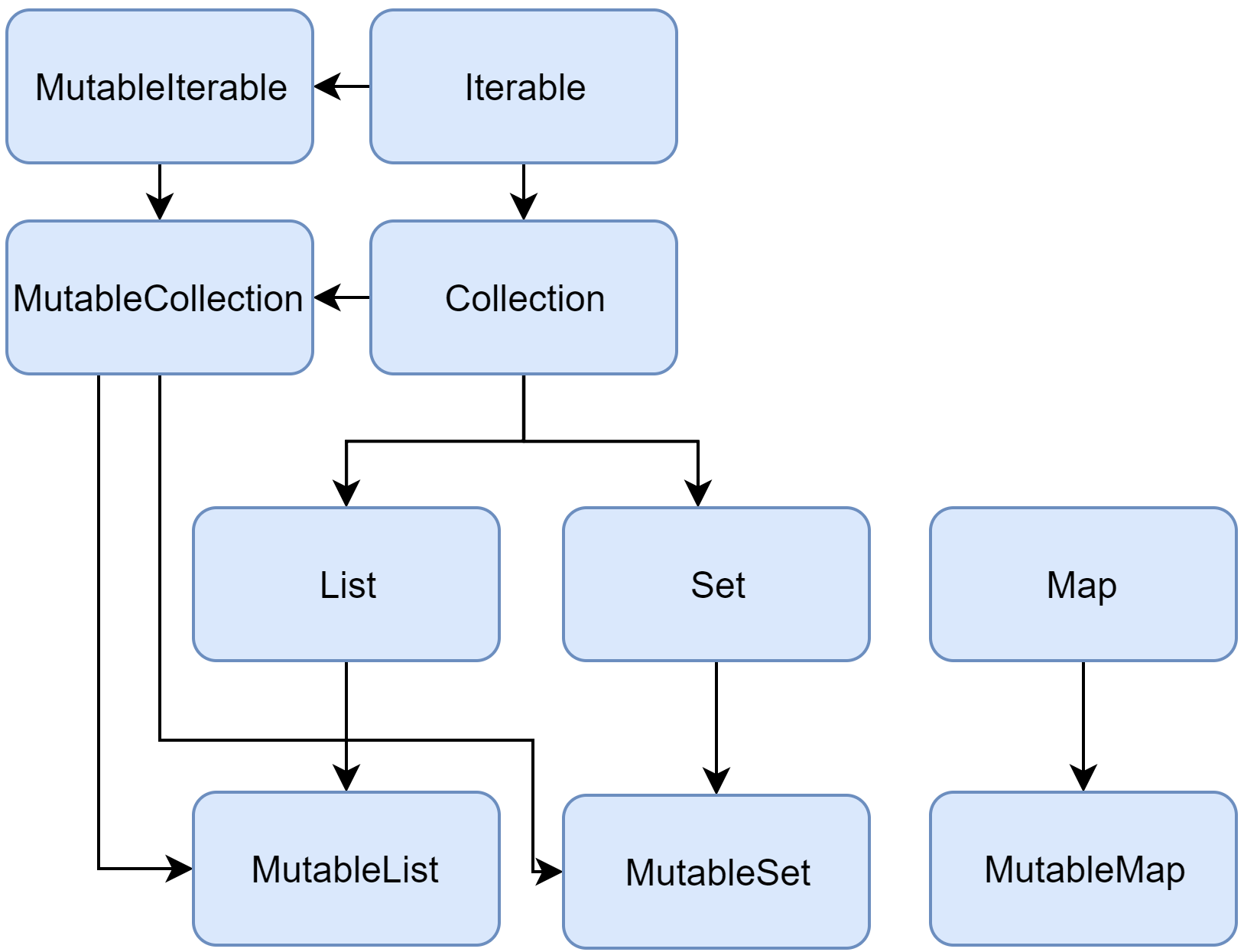
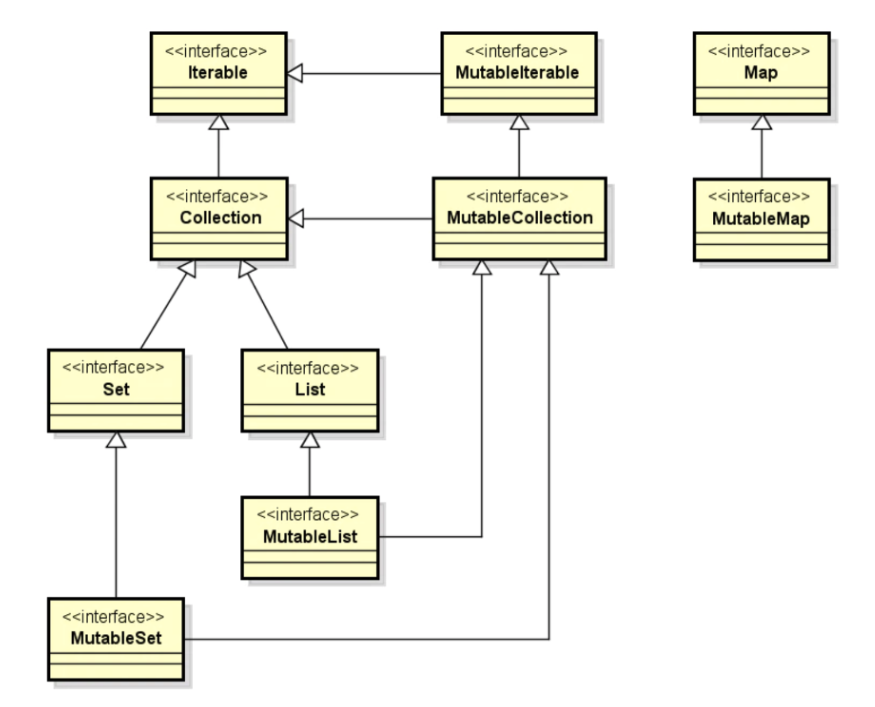
Creating Collections
|
Arrays
|
||
|
Simple Array
|
val intArray: Array<Int> = arrayOf(1, 2, 3) |
|
|
Simple Array of Primitives
|
val primitiveIntArray: IntArray = intArrayOf(1, 2, 3) |
Or
doubleArrayOf(1,2,3) / longArrayOf(1,2,3) / floatArrayOf(1,2,3) etc. |
|
Copy of Array
|
val copyOfArray: Array<Int> = intArray.copyOf() |
|
|
Partial copy of Array
|
val partialCopyOfArray: Array<Int> = intArray.copyOfRange(0, 2) |
|
|
Lists
|
||
|
Simple List
|
val intList: List<Int> = listOf(1, 2, 3) |
Or
arrayListOf(1,2,3) |
|
Empty List
|
val emptyList: List<Int> = emptyList() |
Or
listOf() |
|
List with no null elements
|
val listWithNonNullElements: List<Int> = listOfNotNull(1, null, 3) |
same as
List(1,3) |
|
Sets
|
||
|
Simple Set
|
val aSet: Set<Int> = setOf(1) |
Or
hashSetOf(1) / linkedSerOf(1) |
|
Empty Set
|
val emptySet: Set<Int> = emptySet() |
Or
setOf() / hashSetOf() / linkedSetOf() |
|
Maps
|
||
|
Simple Map
|
val aMap: Map<String, Int> = mapOf("hi" to 1, "hello" to 2) |
Or
mapOf(Pair("hi", 1) / hashMapOf("hi" to 1) / linkedMapOf("hi" to 1) |
|
Empty Map
|
val emptyMap: Map<String, Int> = emptyMap() |
Or
mapOf() / hashMapOf() / linkedMapOf() |
|
Black sheep, mutables
|
||
|
Simple Mutable List
|
val mutableList: MutableList<Int> = mutableListOf(1, 2, 3) |
|
|
Simple Mutable Set
|
val mutableSet: MutableSet<Int> = mutableSetOf(1) |
|
|
Simple Mutable Map
|
var mutableMap: MutableMap<String, Int> = mutableMapOf("hi" to 1, "hello" to 2) |
|
We will be using these collections throughout the cheat sheet.
Operators
|
Method
|
Example
|
Result
|
Explanation
|
|
Iterables
|
|||
|
Plus
|
intList + 1 |
[1, 2, 3, 1] |
Returns a new iterables with old values + added one
|
|
Plus (Iterable)
|
intList + listOf( |
[1, 2, 3, 1, 2, 3] |
Returns a new iterable with old values + values from added iterable
|
|
Minus
|
intList - 1 |
[2, 3] |
Returns a new iterable with old values - subtracted one
|
|
Minus (Iterable)
|
intList - listOf(1, 2) |
[3] |
Returns a new iterable with old values without the values from subtracted iterable
|
|
Maps
|
|||
|
Plus
|
aMap + Pair("Hi", 2) |
{hi=1, hello=2, Goodbye=3} |
Returns new map with old map values + new Pair. Updates value if it differs
|
|
Plus (Map)
|
aMap + mapOf( |
{hi=1, hello=2, Goodbye=3} |
Returns new map with old map values + Pairs from added map. Updates values if they differ.
|
|
Minus
|
aMap - Pair("Hi", 2) |
{Hi=2} |
Takes in a key and removes if found
|
|
Minus (Map)
|
aMap - listOf("hello", "hi") |
{} |
Takes in an iterable of keys and removes if found
|
|
Mutables
|
|||
|
Minus Assign
|
mutableList -= 2 |
[1, 3] |
Mutates the list, removes element if found. Returns boolean
|
|
Plus Assign
|
mutableList += 2 |
[1, 3, 2] |
Mutates the list, adds element. Returns boolean
|
|
Minus Assign (MutableMap)
|
mutableMap.minusAssign("hello") |
{hi=1} |
Takes in key and removes if that is found from the mutated map. Returns boolean. Same as
-= |
|
Plus Assign (MutableMap)
|
mutableMap.plusAssign("Goodbye" to 3) |
{hi=1, Goodbye=3} |
Takes in key and adds a new pair into the mutated map. Returns boolean. Same as
+= |
Transformers
|
Method
|
Example
|
Result
|
Explanation
|
|
Associate
|
intList.associate { |
{1=1, 2=2, 3=3} |
Returns a Map containing key-value pairs created by lambda
|
|
Map
|
intList.map { it + 1 } |
[2,3,4] |
Returns a new list by transforming all elements from the initial Iterable.
|
|
MapNotNull
|
intList.mapNotNull { null } |
[] |
Returned list contains only elements that return as not null from the lamdba
|
|
MapIndexed
|
intList.mapIndexed{ idx, value -> |
[2,4,5] |
Returns a new list by transforming all elements from the initial Iterable. Lambda receives an index as first value, element itself as second.
|
|
MapIndexedNotNull
|
intList.mapIndexedNotNull { idx, value -> |
[4,5] |
Combination of Map, MapIndexed & MapIndexedNotNull
|
|
MapKeys
|
aMap.mapKeys { pair -> pair.key + ", mate" } |
{hi, mate=1, hello, mate=2} |
Transforms all elements from a map. Receives a Pair to lambda, lamdba return value is the new key of original value
|
|
MapValues
|
aMap.mapValues { pair -> pair.value + 2 }) |
{hi=3, hello=4} |
Transforms all elements from a map. Receives a Pair to lambda, lamdba return value is the new value for the original key.
|
|
Reversed
|
intList.reversed()) |
[3,2,1] |
|
|
Partition
|
intList.partition { it > 2 }) |
Pair([3], [1,2]) |
Splits collection into to based on predicate
|
|
Slice
|
intList.slice(1..2)) |
[2,3] |
Takes a range from collection based on indexes
|
|
Sorted
|
intList.sorted()) |
[1,2,3] |
|
|
SortedByDescending
|
intList.sortedByDescending { it } |
[3,2,1] |
Sorts descending based on what lambda returns. Lamdba receives the value itself.
|
|
SortedWith
|
intList.sortedWith(Comparator<Int> { x, y -> |
[3,1,2] |
Takes in a Comparator and uses that to sort elements in Iterable.
|
|
Flatten
|
listOf(intList, aSet).flatten() |
[2,3,4,1] |
Takes elements of all passed in collections and returns a collection with all those elements
|
|
FlatMap with just return
|
listOf(intList, aSet).flatMap { it } |
[2,3,4,1] |
Used for Iterable of Iterables and Lambdas that return Iterables. Transforms elements and flattens them after transformation.
|
|
FlatMap with transform
|
listOf(intList, aSet).flatMap { |
[2,3,4,2] |
FlatMap is often used with monadic containers to fluently handle context, errors and side effects.
|
|
Zip
|
listOf(3, 4).zip(intList) |
[(3,1), (4,2)] |
Creates a list of Pairs from two Iterables. As many pairs as values in shorter of the original Iterables.
|
|
Zip with predicate
|
listOf(3, 4).zip(intList) { |
[(1,3), (2,4)] |
Creates a list of Pairs from two Iterables. As many pairs as values in shorter of the original Iterables. Lambda receives both items on that index from Iterables.
|
|
Unzip
|
listOf(Pair("hi", 1), Pair("hello", 2)).unzip() |
Pair([hi, hello], [1,2]) |
Reverses the operation from
zip. Takes in an Iterable of Pairs and returns them as a Pair of Lists. |
Aggregators
|
Method
|
Example
|
Result
|
Explanation
|
|
Folds And Reduces
|
|||
|
Fold
|
intList.fold(10) { accumulator, value -> |
16 (10+1+2+3) |
Accumulates values starting with initial and applying operation from left to right. Lambda receives accumulated value and current value.
|
|
FoldIndexed
|
intList.foldIndexed(10) { idx, accumulator, value -> |
13 (10+1+2) |
Accumulates values starting with initial and applying operation from left to right. Lambda receives index as the first value.
|
|
FoldRight
|
intList.foldRight(10) { value, accumulator -> |
16 (10+3+2+1) |
Accumulates values starting with initial and applying operation from right to left. Lambda receives accumulated value and current value.
|
|
FoldRightIndexed
|
intList.foldRightIndexed(10) { idx, value, accumulator -> |
16 (10+3+2+1) |
|
|
Reduce
|
intList.reduce { accumulator, value -> |
6 (1+2+3) |
Accumulates values starting with first value and applying operation from left to right. Lambda receives accumulated value and current value.
|
|
ReduceRight
|
intList.reduceRight { value, accumulator -> |
6 (3+2+1) |
Accumulates values starting with first value and applying operation from right to left. Lambda receives accumulated value and current value.
|
|
ReduceIndexed
|
intList.reduceIndexed { idx, accumulator, value -> |
3 (1+2) |
|
|
ReduceRightIndexed
|
intList.reduceRightIndexed { idx, value, accumulator -> |
3 (2+1) |
|
|
Grouping
|
|||
|
GroupBy
|
intList.groupBy { value -> 2 } |
{2=[1, 2, 3]} |
Uses value returned from lamdba to group elements of the Iterable. All values whose lambda returns same key will be grouped.
|
|
GroupBy (With new values)
|
intList.groupBy({ it }, { it + 1 }) |
{1=[2], 2=[3], 3=[4]} |
Same as group by plus takes another lambda that can be used to transform the current value
|
|
GroupByTo
|
val mutableStringToListMap = mapOf("first" to 1, |
{1=[11], 2=[12]}
|
Group by first lambda, modify value with second lambda, dump the values to given mutable map
|
|
GroupingBy -> FoldTo
|
intList.groupingBy { it } |
{1=1, 2=2, 3=3} |
Create a grouping by a lambda, fold using passed in lambda and given initial value, insert into given mutable destination object
|
|
Grouping > Aggregate
|
intList.groupingBy { "key" } |
{key=123} |
Create a grouping by a lambda, aggregate each group. Lambda receives all keys, nullable accumulator and the element plus a flag if value is the first on from this group. If isFirst --> accumulator is null.
|
|
Chunked
|
val list = listOf("one", "two", "three", "four", "five", "six", "seven", "eight", "nine", "ten") |
[[one, two, three], |
Splits this collection into a list of lists each not exceeding the given size
The last list in the resulting list may have less elements than the given size. |
|
Aggregating
|
|||
|
Count
|
intList.count() |
3 |
AKA size
|
|
Count (with Lambda)
|
intList.count { it == 2 }) |
1 |
Count of elements satisfying the predicate
|
|
Average
|
intList.average() |
2.0 ((1+2+3)/3 = 2.0) |
Only for numeric Iterables
|
|
Max
|
intList.max() |
3 |
Maximum value in the list. Only for Iterables of Comparables.
|
|
MaxBy
|
intList.maxBy { it * 3 } |
3 |
Maximum value returned from lambda. Only for Lambdas returning Comparables.
|
|
MaxWith
|
intList.maxWith(oneOrLarger) |
1 |
Maximum value defined by passed in Comparator
|
|
Min
|
intList.min() |
1 |
Minimum value in the list. Only for Iterables of Comparables.
|
|
MinBy
|
intList.minBy { it * 3 } |
1 |
Minimum value returned from lambda. Only for Lambdas returning Comparables.
|
|
MinWith
|
intList.minWith(oneOrLarger) |
3 |
Minimum value defined by passed in Comparator
|
|
Sum
|
intList.sum() |
6 |
Summation of all values in Iterable. Only numeric Iterables.
|
|
SumBy
|
intList.sumBy { if(it == 3) 6 else it }) |
9 (1+2+6) |
Summation of values returned by passed in lambda. Only for lambdas returning numeric values.
|
|
SumByDouble
|
intList.sumByDouble { it.toDouble() } |
6.0 |
Summation to Double values. Lambdareceives the value and returns a Double.
|
val oneOrLarger = Comparator<Int> { x, y ->
when{
x == 1 -> 1
y == 1 -> -1
else -> y - x
}
}
when{
x == 1 -> 1
y == 1 -> -1
else -> y - x
}
}
Filtering and other predicates + getting individual elements
|
Method
|
Example
|
Result
|
Notes
|
|
Filtering
|
|||
|
Filter
|
intList.filter { it > 2 } |
[3] |
Filter-in
|
|
FilterKeys
|
aMap.filterKeys { it != "hello" } |
{hi=1} |
|
|
FilterValues
|
aMap.filterValues { it == 2 } |
{hello=2} |
|
|
FilterIndexed
|
intList.filterIndexed { idx, value -> |
[2,3] |
|
|
FilterIsInstance
|
intList.filterIsInstance<String>() |
[] |
Type parameter defines the class instance. None returned because in our list all of them are ints
|
|
Taking and Dropping
|
|||
|
Take
|
intList.take(2) |
[1,2] |
Take n elements from Iterable. If passed in number larger than list, full list is returned.
|
|
TakeWhile
|
intList.takeWhile { it < 3 } |
[1,2] |
|
|
TakeLast
|
intList.takeLast(2) |
[2,3] |
|
|
TakeLastWhile
|
intList.takeLastWhile { it < 3 } |
[] |
Last element already satisfies this condition --> empty
|
|
Drop
|
intList.drop(2) |
[3] |
Drop n elements from the start of the Iterable.
|
|
DropWhile
|
intList.dropWhile { it < 3 } |
[3] |
|
|
DropLast
|
intList.dropLast(2) |
[1] |
|
|
DropLastWhile
|
intList.dropLastWhile { it > 2 } |
[1, 2] |
|
|
Retrieving individual elements
|
|||
|
Component
|
intList.component1() |
1 |
There are 5 of these -->
component1(), component2(), component3(), component4(), component5() |
|
ElementAt
|
intList.elementAt(2) |
3 |
Retrieve element at his index. Throws IndexOutOfBounds if element index doesn't exist
|
|
ElementAtOrElse
|
intList.elementAtOrElse(13) { 4 } |
4 |
Retrieve element at his index or return lambda value if element index doesn't exist.
|
|
ElementAtOrNull
|
intList.elementAtOrNull(666) |
null |
Retrieve element at his index or return null if element index doesn't exist.
|
|
Get (clumsy syntax)
|
intList.get(2) |
3 |
Get element by index
|
|
Get
|
intList[2] |
3 |
Shorthand and preferred way for the one above
|
|
GetOrElse
|
intList.getOrElse(14) { 42 } |
42 |
Get element or return lambda value if it doesn't exist.
|
|
Get from Map (clumsy syntax)
|
aMap.get("hi") |
1 |
|
|
Get from Map
|
aMap["hi"] |
1 |
|
|
GetValue
|
aMap.getValue("hi")1 |
1 |
Get value or throw NoSuchElementException
|
|
GetOrDefault
|
aMap.getOrDefault("HI", 4) |
4 |
Get value or return the value returned from lambda
|
|
GetOrPut
|
mutableMap.getOrPut("HI") { 5 } |
5 |
MutableMap only. Returns the the value if it exist, otherwise puts it and returns put value.
|
|
Finding
|
|||
|
BinarySearch
|
intList.binarySearch(2) |
1 |
Does a binary search through the collection and returns the index of the element if found. Otherwise returns negative index.
|
|
Find
|
intList.find { it > 1 } |
2 |
First element satisfying the condition or null if not found
|
|
FindLast
|
intList.findLast { it > 1 } |
3 |
Last element satisfying the condition or null if not found
|
|
First
|
intList.first() |
1 |
First element of Iterable or throws NoSuchElementException
|
|
First with predicate
|
intList.first { it > 1 } |
2 |
Same as find but throws NoSuchElementException if not found
|
|
FirstOrNull
|
intList.firstOrNull() |
1 |
Throw safe version of
first(). |
|
FirstOrNull with predicate
|
intList.firstOrNull { it > 1 } |
2 |
Throw safe version of
first(() -> Boolean). |
|
IndexOf
|
intList.indexOf(1) |
0 |
|
|
IndexOfFirst
|
intList.indexOfFirst { it > 1 } |
1 |
|
|
IndexOfLast
|
intList.indexOfLast { it > 1 } |
2 |
|
|
Last
|
intList.last() |
3 |
Throws NoSuchElementException if empty Iterable
|
|
Last with predicate
|
intList.last { it > 1 } |
3 |
Throws NoSuchElementException if none found satisfying the condition.
|
|
LastIndexOf
|
intList.lastIndexOf(2) |
1 |
|
|
LastOrNull
|
intList.lastOrNull() |
3 |
Throw safe version of
last() |
|
LastOrNull with predicate
|
intList.lastOrNull { it > 1 } |
3 |
Throw safe version of
last(() -> Boolean). |
|
Unions, distincts, intersections etc.
|
|||
|
Distinct
|
intList.distinct() |
[1, 2, 3] |
|
|
DistinctBy
|
intList.distinctBy { if (it > 1) it else 2 } |
[1,3] |
|
|
Intersect
|
intList.intersect(listOf(1, 2)) |
[1,2] |
|
|
MinusElement
|
intList.minusElement(2) |
[1,3] |
|
|
MinusElement with collection
|
intList.minusElement(listOf(1, 2)) |
[3] |
|
|
Single
|
listOf("One Element").single() |
One Element |
Returns only element or throws.
|
|
SingleOrNull
|
intList.singleOrNull() |
null
|
Throw safe version of
single(). |
|
OrEmpty
|
intList.orEmpty() |
[1, 2, 3] |
Returns itself or an empty list if itself is null.
|
|
Union
|
intList.union(listOf(4,5,6)) |
[1,2,3,4,5,6] |
|
|
Union (infix notation)
|
intList union listOf(4,5,6) |
[1,2,3,4,5,6] |
|
Checks and Actions
|
Method
|
Example
|
Result
|
Notes
|
|
Acting on list elements
|
|||
val listOfFunctions = listOf({ print("first ") }, { print("second ") }) |
|||
|
ForEach
|
listOfFunctions.forEach { it() } |
first second |
|
|
ForEachIndexed
|
listOfFunctions.forEachIndexed { idx, fn -> |
first Won't do it |
|
|
OnEach
|
intList.onEach { print(it) } |
123 |
|
|
Checks
|
|||
|
All
|
intList.all { it < 4 } |
true |
All of them are less than 4
|
|
Any
|
intList.any() |
true |
Collection has elements
|
|
Any with predicate
|
intList.any { it > 4 } |
false |
None of them are more than 4
|
|
Contains (standard)
|
intList.contains(3) |
true |
|
|
Contains (idiomatic Kotlin)
|
3 in intList |
true |
|
|
ContainsAll
|
intList.containsAll(listOf(2, 3, 4)) |
false |
|
|
Contains (Map, standard)
|
aMap.contains("Hello") |
false |
Same as
containsKey() |
|
Contains (Map, Idiomatic Kotlin)
|
"Hello" in aMap |
false |
Same as
containsKey() |
|
ContainsKey
|
aMap.containsKey("hello") |
true |
Same as
contains() |
|
ContainsValue
|
aMap.containsValue(2) |
true |
|
|
None
|
intList.none() |
false |
There are elements on the list
|
|
None with predicate
|
intList.none { it > 5 } |
true |
None of them are larger than 5
|
|
IsEmpty
|
intList.isEmpty() |
false |
|
|
IsNotEmpty
|
intList.isNotEmpty() |
true |
|